3 Things to Watch Out for When Drinking Tea During Xiaoshu — #2 Catches Many People
July 18, 2026

Xiaoshu (Minor Heat) typically falls around July 7th each year. As the old saying goes, "Minor Heat, Major Heat — steaming above, boiling below." From this point on, the heat is real. Step out during the day and come back looking like you've been pulled out of a pool.
When the weather turns hot, tea-drinking habits shift accordingly. Cold-brewed tea takes its place on the table, and all sorts of cheap tea promotions flood the internet. Friends circle feeds are full of cold brew photos and bargain-hunting hauls — one more lively than the next.
But some pitfalls catch people year after year. Today I'll cover the three most common ones — especially the second, where I've seen far too many tea lovers get caught.
Pitfall #1: Only Drinking Cold-Brewed Tea in Summer
Cold-brewed tea has been trendy in recent years, and I cold brew myself in summer. Cold-brewed white tea, cold-brewed sun-dried black tea — they're genuinely delicious, clean and sweet. Keep a pitcher in the fridge and pour a glass anytime — so convenient.
But here's the problem — some people only drink cold in summer, not touching a single cup of hot tea. From morning to night, the cold-brewed tea from the fridge never leaves their hand.
That's when trouble starts.
Traditional Chinese medicine says "the stomach prefers warmth and dislikes cold." Long-term consumption of only cold drinks takes a toll on the stomach. Too much cold-brewed tea and your stomach feels cold and bloated, with appetite declining alongside. Summer already weakens the spleen and stomach — add daily cold drinks on top, and the damage compounds. I had a long-time customer who drank cold-brewed white tea every day one summer. After two months, his stomach started acting up. He only recovered after switching to hot brewing mornings and evenings, with cold brew only at noon.
And from a heat-relief perspective, hot tea is actually more effective than cold drinks. Drinking hot tea prompts the body to sweat, and as sweat evaporates it carries away heat, actually lowering your body's surface temperature. This is scientifically backed — after a hot drink, skin temperature briefly rises, then drops through sweating, with a net cooling effect. Cold drinks only cool your mouth momentarily without truly lowering body temperature.
My advice: Alternate between cold and hot brewing. During the hot part of the day, enjoy a cold brew to satisfy the craving; mornings and evenings, brew a pot of hot tea to nurture your stomach. Don't go to extremes. If your stomach runs cold to begin with, drink cold brew even more sparingly.
Pitfall #2: Buying 9.9 Free-Shipping Tea Bags
This is the pitfall that catches the most people.
Open any e-commerce platform and search "tea" — 9.9 free shipping, 19.9 per jin (500g) tea is everywhere. The photos look great, the reviews are plentiful, and sales easily top ten thousand. Seems legit.
But think about it — 9.9 with free shipping, the delivery fee alone is several yuan, packaging costs money too, so how much is the tea itself actually worth? From picking to processing to pressing, the raw material cost alone for a jin of tea exceeds that price. What quality of tea can 9.9 buy? You can imagine.
Teas at this price point typically fall into a few categories:
- Broken tea and fannings: Offcuts sifted from good tea, bagged and sold
- Refreshed old tea: Unsold tea that sat for years, repackaged and put back on the market
- Fake origin: Labeled "Yunnan ancient tree" but actually terrace tea from who knows where
It's not that cheap tea is absolutely undrinkable — it's that you need to know what you're drinking. At 9.9, you're drinking a tea-flavored beverage, not real tea. Occasional consumption is harmless, but if you drink it daily, who can say what those unidentified substances are doing to your body.
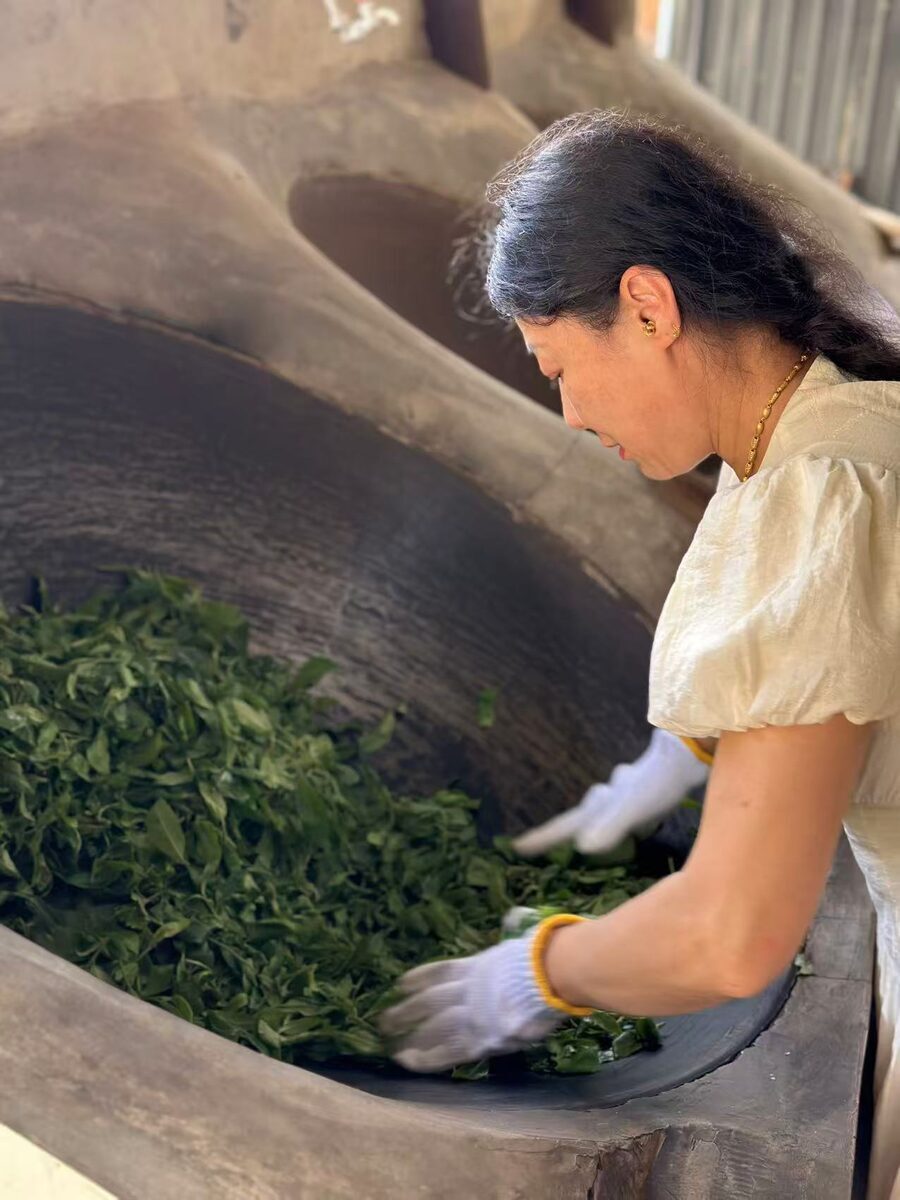
How to avoid these traps? Three principles:
- Check the origin: Tea that specifies the exact mountain and village is more trustworthy than one that only says "Yunnan Pu-erh." If a seller won't even clearly state the origin, do you expect the quality to be good?
- Check the raw material: Ancient tree, old tree, terrace — prices vary greatly, but at least it should be clearly labeled. Some teas claim "pure ancient tree" yet cost less than terrace tea — that's a contradiction in itself.
- Find a reliable channel: Sellers with a physical shop or their own tea mountains are more credible than purely online shops. Being able to taste first beats not being able to. Being able to chat on WeChat and get your questions answered beats someone who only sends promotional links.
In my years running Songdehao, the deepest lesson I've learned is: the information gap in the tea industry is enormous. Rather than hoarding a pile of undrinkable cheap tea, it's better to buy less but buy better. A cup of good tea is a pleasure; a cup of bad tea is suffering.
Pitfall #3: Believing Older Is Always Better for Aged Tea
The words "aged tea" are practically worn out these days.
"30-year aged tea," "50-year aged" — the claims are thrown around constantly, and prices climb with the years. Many tea lovers assume: the older the year, the better the tea. They spend big money on a cake of "20-year aged tea," open it up, take a sip — moldy, musty, barely drinkable.
Not necessarily.
Whether aged tea is good depends on storage. The year is just time; storage determines what happens to the tea during that time. The same 20-year tea stored in dry conditions versus humid conditions will taste worlds apart.
Take the same cake of 2014 raw Pu-erh: stored in a dry warehouse with ventilation, versus stored in a damp environment — after 12 years, the flavors are completely different. The former develops mellow woody aromas, translucent liquor, and a smooth mouthfeel; the latter may have mold and off-flavors, cloudy liquor, and a throat-gripping sensation.
Common problems with poorly stored aged tea:
- Moldy or musty aroma: Smells wrong immediately, with noticeable damp notes
- Cloudy liquor: Properly aged tea has translucent liquor; cloudiness indicates a problem
- Throat-gripping: Drinking it makes your throat feel tight and uncomfortable
- Bland taste: Has the years but not the flavor — means it was stored to death
How to judge whether aged tea was well-stored? Remember three things:
- Smell the dry leaves: Clean aroma, no mold or off-smells. Good storage gives dry leaves a pleasant aged fragrance
- Check the liquor color: Translucent, not cloudy. Aged raw Pu-erh ranges from orange-amber to amber; aged ripe Pu-erh is deep red and bright
- Taste the mouthfeel: Smooth on entry, no off-flavors, no throat-gripping. Well-stored aged tea feels good to drink
Always taste before buying aged tea. If you can't taste it first, be cautious.
Summary
For drinking tea during Xiaoshu, remember three things:
- Cold brew is delicious, but don't drink only cold — hot tea is what truly relieves heat, and your stomach needs care
- Cheap isn't good — 9.9 tea is "tea flavor" not tea. Spending money is a small matter; harming your body is a big one
- Aged tea is about storage, not age — poorly stored tea is waste no matter how old. Years don't equal quality
At the end of the day, drinking tea should be a joy. You don't need the most expensive, the oldest, or the most famous — just find what suits you and feels good to drink. That's enough. Don't let these pitfalls ruin the fun, and don't get led astray by marketing talk.
If you have any questions about selecting tea, or aren't sure whether a particular tea is worth buying, let's chat on WeChat — I'll help you avoid the traps.
Frequently Asked Questions
What tea is good to drink during Xiaoshu?
During the Xiaoshu period, it's suitable to drink white tea, raw Pu-erh, and other teas with a cooling nature to clear heat and relieve summer warmth. Sun-dried black tea is also good — its taste is gentle and non-irritating. Ripe Pu-erh is warming in nature; friends with cold stomachs can drink it in moderation. Hot brewing is recommended as the primary method, with cold brewing as a supplement.
Can cheap tea be drunk?
Not all cheap tea is undrinkable, but 9.9 free-shipping tea should definitely be approached with caution. Tea has a cost floor — excessively low prices usually mean poor raw materials and rough processing. Choose tea with clear origin information and traceable raw material sources; a reasonable price is sufficient.
How to judge the storage condition of aged tea?
Mainly look at three aspects: first, smell the dry leaves — well-stored tea has clean, pleasant aged aroma with no moldy or musty notes; second, check the liquor color — properly aged tea has clear, translucent liquor, not cloudy; third, taste the mouthfeel — well-stored aged tea is smooth on entry, with aged aroma and no off-flavors or throat-gripping sensation.

Follow "Songdehao" Official Account
Get more tea tips, brewing guides & new arrival updates
Want to learn more about Yunnan ancient tree tea? Contact us via WeChat
Contact Us →