The Right Way to Hot Brew White Tea: Finding Ritual in Summer
July 6, 2026

In the previous article I wrote about cold brewing white tea, and many friends said it's indeed convenient in summer. But some seasoned tea drinkers messaged me privately: "Boss, cold brewing is easy, but I still prefer the taste of hot brewing."
I completely understand. Cold brewing wins on refreshing convenience, but only hot brewing can fully unfold the layered aromas and evolving flavors of white tea. A cup of hot white tea changes from the first infusion to the seventh — that sense of evolution is something cold brewing simply can't deliver.
Today I'll systematically walk through the method for hot brewing white tea. I'll keep the parameters as specific as possible — follow along and you basically can't go wrong.
Water Temperature: 85–90°C, Don't Use Boiling Water Directly
The biggest mistake in hot brewing white tea is pouring just-boiled water directly over the leaves.
White tea's craft is defined by no frying and no rolling — only withering and drying — preserving the most original state of the tea leaves. The buds and leaves are delicate, especially Silver Needle (Baihao Yinzhen) which is all buds; boiling water will scald the tender buds instantly, causing bitterness and destroying the fine downy aroma.
The correct water temperature is 85–90°C. Specifically, two scenarios:
- New white tea (1–3 years): Around 85°C. After the water boils, let it sit for a moment — open the kettle lid and wait a minute or two, and it'll be roughly this temperature
- Aged white tea (3+ years): 90°C or even 95°C works. Aged white tea has gone through transformation, its compounds are more stable and heat-resistant; higher temperatures actually bring out its mellow richness
How to judge the temperature? The simplest method: after boiling, pour the water into a fairness pitcher (gongdao bei) first, then into the gaiwan — this transfer drops the temperature by about 3–5°C. If you're still unsure, get a temperature-controlled electric kettle and set it directly — the most worry-free approach.
Teaware: Gaiwan Is Most Reliable, Glass Pot Works Too
What teaware for hot brewing white tea? The top recommendation is a gaiwan.
A white porcelain gaiwan of about 120ml is the most versatile choice. Porcelain doesn't absorb flavors or mix aromas, faithfully reflecting the tea's true character. A gaiwan also has the advantage of fast pouring and flexible control — pour quickly when you want, let it steep when you want.
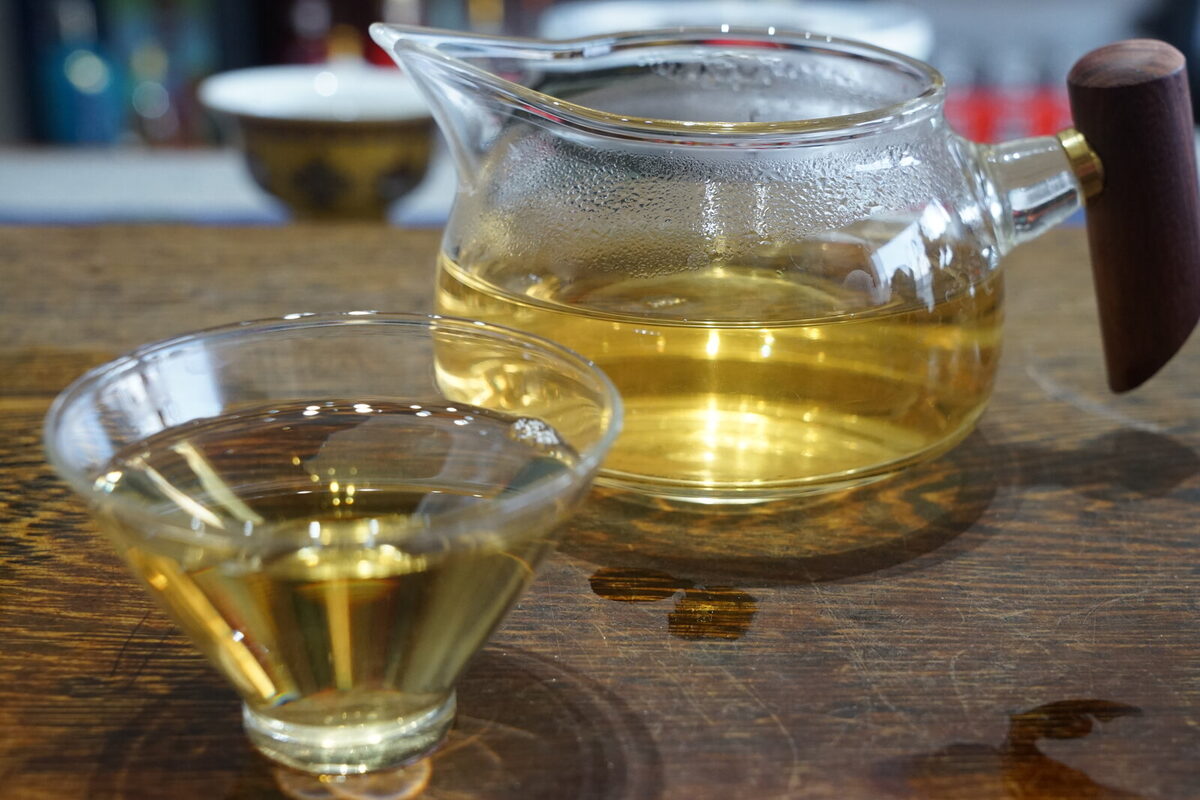
If you enjoy watching the liquor color change, a glass pot is also a good option. White tea's color evolves from pale yellow to golden to amber — clearly visible through glass, which is a visual pleasure in itself. But glass loses heat quickly and doesn't retain warmth as well as a gaiwan, so later infusions may need slightly longer steeping times.
Zisha (purple clay) teapot for white tea? Not recommended. Zisha is highly absorbent and tends to soak up white tea's delicate aroma. Moreover, white tea's flavor is inherently light and gentle; the "enclosed" quality of zisha can make it taste stuffy. Save zisha for Pu-erh and oolong.
Tea Amount: 3–5 Grams, Don't Overdo It
For a 120ml gaiwan, use 3–5 grams of tea.
The exact amount depends on your taste: prefer it lighter? 3 grams is enough. Like it stronger? 5 grams is the cap. White tea isn't Pu-erh — you don't need to use a lot. Too much tea and the first few infusions may turn bitter, masking the sweet, smooth character that white tea should have.
I should mention our Jinggu large-leaf white tea. Jinggu white tea is a large-leaf variety with plump buds and leaves, rich in compounds — at the same gram weight, it produces a stronger flavor than small-leaf white teas. So if you're using Jinggu white tea, start with 3 grams and add more if it tastes too light.
I recommend weighing your tea with a scale rather than estimating by feel. The margin of error with hand-grabbing is huge — the same "small pinch" could differ by a gram or two, and the resulting brew would taste completely different.
Steeping Time: Extend Gradually, Don't Memorize Rigidly
The core principle for steeping time in hot brewed white tea comes down to four words: extend gradually.
Specific reference:
- First infusion: About 30 seconds. The first brew is mainly to awaken and moisten the tea, letting the leaves unfurl
- Second infusion: 20–30 seconds. The tea is already awake and releases flavor quickly, so no need for a long steep
- Third through fifth infusions: Add 10–15 seconds per infusion. This is when white tea is at its best — the most full-bodied and satisfying
- Sixth infusion onward: Extend by 20–30 seconds per infusion. Flavor begins to decline and needs longer extraction
Note that these times are based on 85–90°C water, 3–5g tea, and a 120ml gaiwan. If your vessel is larger or your tea amount smaller, adjust accordingly.
Another practical tip: pour based on liquor color. The tea's color is the most intuitive indicator of strength — pale yellowish-white means it's too weak, golden and translucent is just right, deep yellow trending amber means it's too strong. After a few sessions, you'll naturally learn to judge when to pour just by looking at the color.
New vs. Aged White Tea: Different Brewing Approaches
This is something many people overlook: new and aged white teas require different hot brewing methods.
New white tea (1–3 years):
- Lower water temperature, around 85°C
- Pour quickly — first few infusions no more than 30 seconds
- Focus on tasting freshness, downy aroma, and clean sweetness
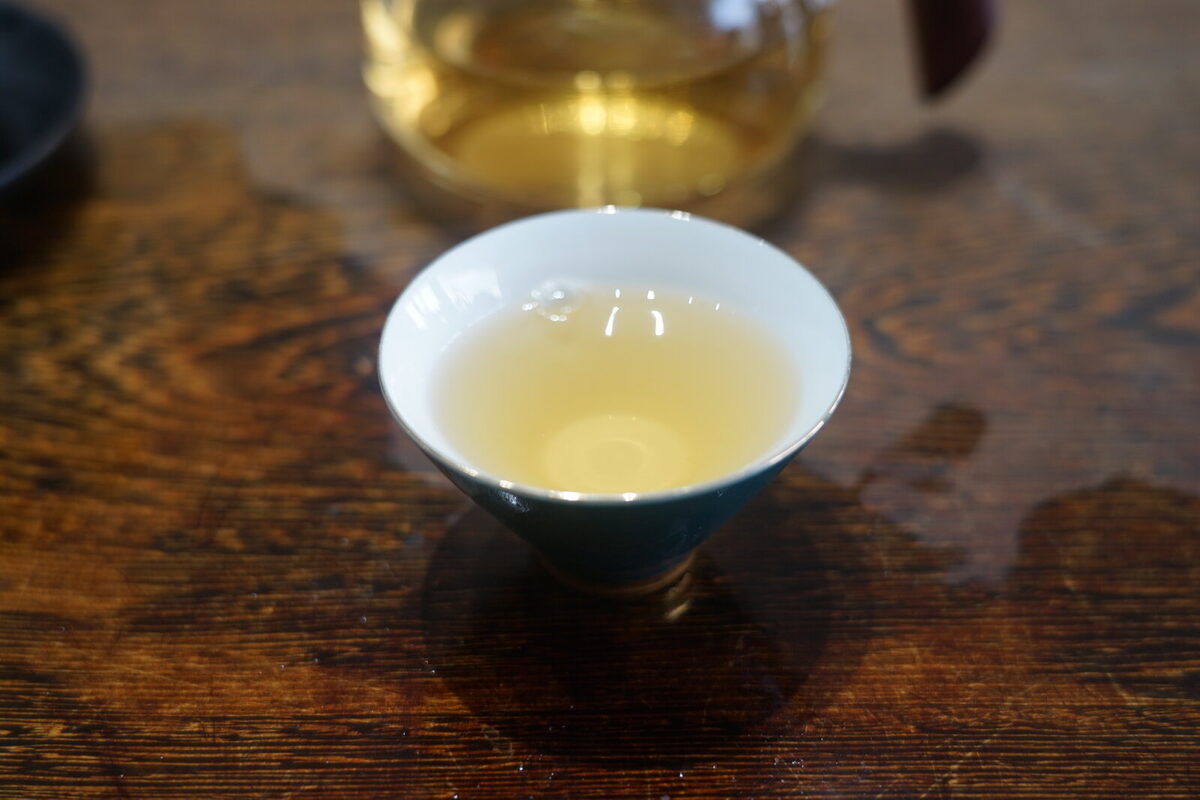
- Pale yellow liquor, bright and clear mouthfeel
- Don't boil-brew; boiling tends to make it bitter
Aged white tea (3+ years):
- Water temperature can reach 90–95°C
- Extend steeping time per infusion; don't worry about over-steeping
- Focus on tasting mellowness and jujube aroma (typical of 3-5 year aged white tea), transitioning to medicinal aroma at 7+ years
- Golden to amber liquor, smooth and silky mouthfeel
- When later infusions weaken, you can switch to boiling — boiled aged white tea has a wonderfully distinct character
We have Jinggu aged white teas from 2018, 2019, and 2021, with over 300 kilograms in stock. The hot brewing experience of aged tea is completely different from new tea — new tea is like drinking spring water, crisp and vibrant; aged tea is like drinking rice soup, warm and velvety. Both are wonderful; it depends on what you prefer.
Characteristics of Jinggu Large-Leaf White Tea in Hot Brewing
Let me also talk about our main product, Jinggu large-leaf white tea.
Jinggu white tea is a Yunnan large-leaf variety, and it differs noticeably in taste from Fujian Fuding white tea (primarily small-leaf):
- Plumper buds: Large-leaf buds are thick and densely covered with white down, producing a more pronounced downy aroma
- Stronger flavor: Large-leaf varieties are rich in compounds; at the same weight, the flavor is more intense
- More direct sweetness: Jinggu white tea's sweetness isn't subtle or vague — it's an upfront, clearly perceptible sweetness
- Better longevity: Large-leaf leaves are thick and sturdy, yielding more infusions
When hot brewing Jinggu white tea, I recommend starting to savor it from the third infusion. The first two are a warm-up; infusions three through five are the climax — downy aroma, honey notes, and sweetness converge in this phase. After drinking, there's a clear returning sweetness (huigan) and a cooling sensation in the mouth — it doesn't feel drying even in summer.
Drinking Hot White Tea in Summer Isn't Counter-Seasonal
Some people find it odd to drink hot tea in summer, but it's actually not.
Traditional Chinese medicine speaks of "treating winter ailments in summer" — drinking hot tea in summer actually helps the body sweat and release heat. A cup of hot white tea brings a light sweat, and the body's surface temperature actually drops — far more comfortable than the "fake coolness" of ice-cold drinks.
Moreover, white tea has a cooling nature, not as warming as black tea or ripe Pu-erh. Summer hot white tea gives you the clarity of hot tea without causing internal heat. Aged white tea in particular has mellowed in nature, so even those with a cold-sensitive spleen and stomach can drink it in summer.
So don't think summer means only cold brewing. Find a free afternoon, boil some water, weigh out a few grams of white tea, and brew slowly with a gaiwan. First infusion to awaken, second to test, third to truly begin — the process itself is a ritual.
Hot brewing white tea isn't hard. The keys are: don't let the water get too hot, don't use too much tea, and don't pour too slowly. Master these three points and your white tea won't disappoint.
Want to learn more white tea brewing tips or get purchasing advice? Let's chat on WeChat.
Frequently Asked Questions
What temperature should I use for hot brewing white tea?
The recommended water temperature for hot brewing white tea is 85–90°C. New white tea (1–3 years) should use around 85°C to avoid scalding tender buds and causing bitterness; aged white tea (3+ years) can use 90°C or even 95°C, as higher temperatures better bring out the mellow flavors developed through aging.
Is the brewing method the same for aged and new white tea?
Not exactly. New white tea uses lower water temperature (85°C) with quick pouring — the first few infusions take just 10–20 seconds, focusing on freshness and downy aroma. Aged white tea can use higher temperature (90–95°C) with appropriately longer steeping per infusion, focusing on mellowness and jujube aroma. Aged white tea can also be boiled, while boiling is not recommended for new white tea.
How many infusions can white tea last?
With gaiwan brewing, new white tea typically lasts 5–7 infusions, while aged white tea can go 8–10 or even more. The exact number depends on tea amount, water temperature, and pouring speed. When later infusions weaken, aged white tea can be switched to boiling to continue extracting remaining compounds.

Follow "Songdehao" Official Account
Get more tea tips, brewing guides & new arrival updates
Want to learn more about white tea brewing techniques? Contact us via WeChat
Contact Us →