What Yunnan's Tea Mountains Look Like During the Rainy Season
July 4, 2026

Many people picture tea mountains as blue skies, white clouds, and sunlight dappling tender buds. Honestly, that is indeed the norm during spring tea season. But from June to August each year, Yunnan enters its rainy season, and the tea mountains take on a completely different face.
The first time I went up a mountain during the rainy season was a few years ago, heading to Jingmai to source summer tea. The car slid twice on the winding mountain road, and my palms were sweating the entire way. When I finally arrived, every step sank into mud — there was more dirt on my shoes than tea leaves in my hands.
Today I'll talk about the real rainy-season tea mountains — not romantic, but real.
Clouds and Mist Are the Norm, Not Scenery
On the tea mountains during rainy season, swirling clouds aren't some poetic literary image — they're a daily fact. Step outside in the morning and visibility drops to under twenty meters; mountains and trees blur into a mass of gray-white. By noon the mist might thin for a while, but it presses back in before long.
This climate is actually beneficial for the tea plants. Cloud cover blocks direct sunlight, increasing diffuse light, which promotes the synthesis of nitrogen compounds in the leaves and raises amino acid content. This is why the saying "clouds and mist produce good tea" for high-mountain tea has scientific backing.
The problem is — when the fog is thick, you can't see anything. Walking through the tea gardens, you can't see someone ten meters ahead or behind. First-timers find it a bit unnerving.
The Roads Are Harder Than the Tea
The biggest challenge of going up the mountain during rainy season isn't the tea — it's the road.
Many of Yunnan's tea mountains are in remote areas where the winding mountain roads are narrow to begin with. Once the rains hit, the surface becomes pitted with puddles and caked in mud. Some stretches have soft roadbeds — you can see the pavement shift as the car rolls over it. I've seen vehicles stuck in the mud, eventually pushed out by villagers.
Walking isn't any easier. The dirt paths between tea gardens turn to slurry after rain — one step sinks to the ankle, and pulling your foot out wraps two pounds of mud around your shoe. Locals in flip-flops glide over it as if on flat ground; city dwellers in hiking boots can barely move — that's the reality.
So when visiting tea mountains during the rainy season, the first thing isn't looking at tea — it's checking road conditions. Never go into the mountains during a rainstorm. This is no joke.
The Tea Trees Are Growing Wildly
During the rainy season, the tea trees grow at a rate you can actually see.
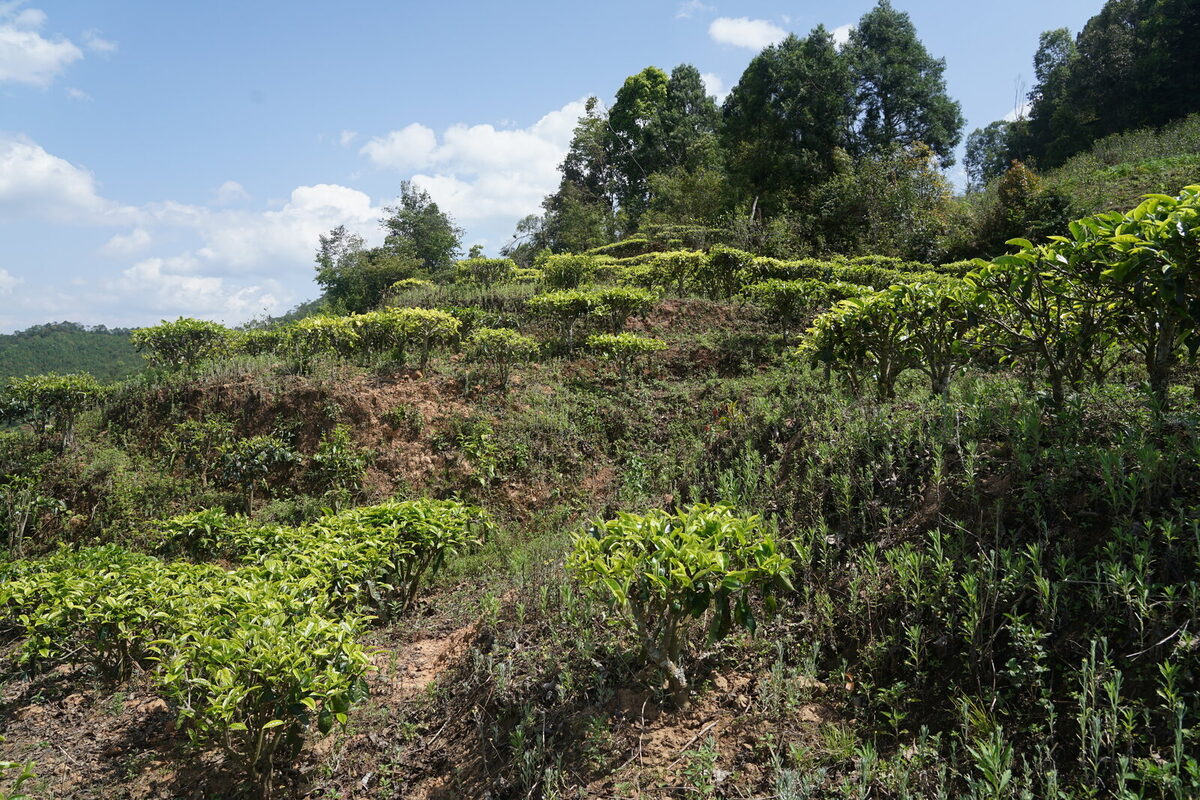
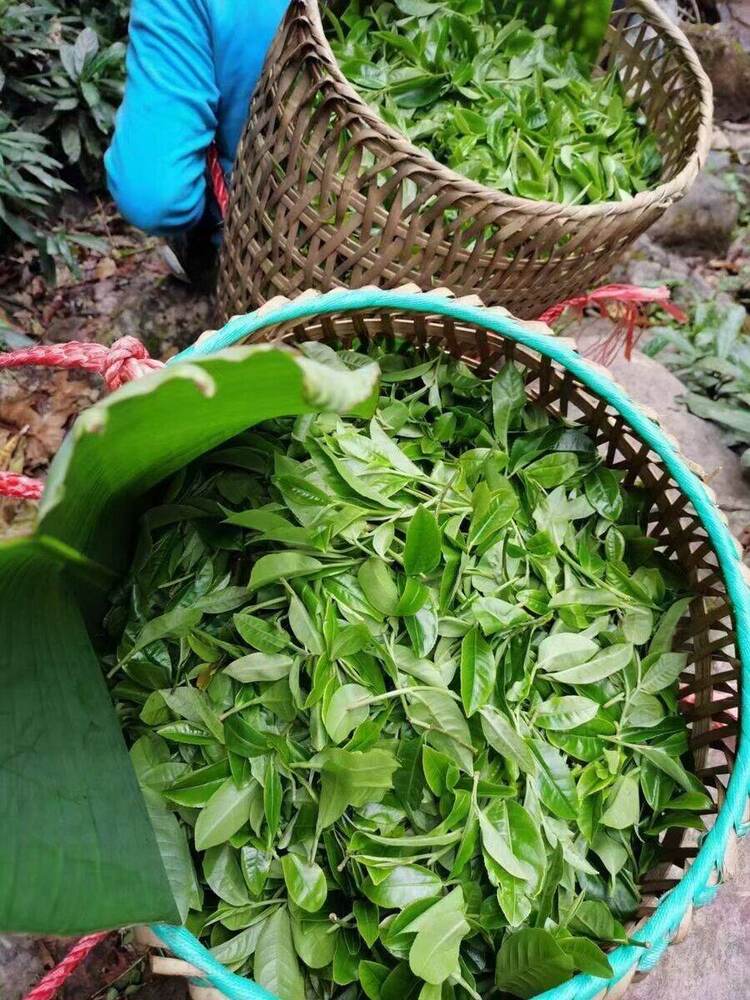
With abundant rain and high temperatures, new shoots sprout rapidly. After the spring harvest, if left unattended, the tea plants can push out several more rounds of new buds during the rainy season. I've seen rainy-season tea gardens where tender shoots grow several centimeters in a week — the leaves are large and thin, completely different from the plump buds of spring.
The problem is — growing fast doesn't mean growing well. The characteristics of rainy-season fresh leaves are: thin leaves, high water content, and relatively diluted compounds. Simply put, more water and fewer active components. Compared to the concentrated, substantial fresh leaves of spring, rainy-season leaves are inherently at a disadvantage.
This is why in the Yunnan tea industry, spring tea is always first tier, and rainy-season tea (summer tea) ranks below. It's not that good tea can't be made — it's that the raw material's inherent conditions are what they are.
The Processing Challenge: Too Much Moisture
High water content in fresh leaves is the biggest headache in rainy-season tea processing.
Normal spring tea fresh leaves have a water content of around 75%, while rainy-season leaves can exceed 80%. Don't underestimate those 5 percentage points — in practice, the impact is enormous.
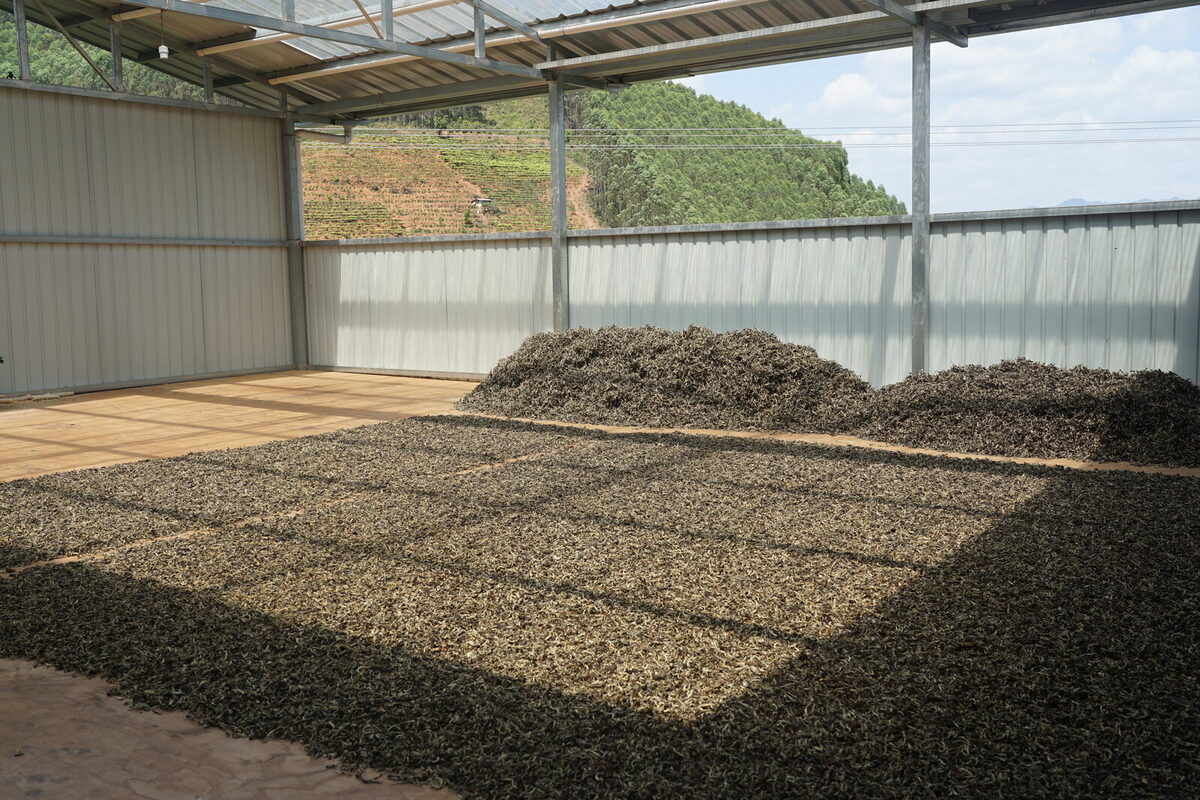
Withering is harder. Air humidity is high during the rainy season, and fresh leaves spread on withering troughs can't release their moisture. What takes four to five hours in spring may take seven to eight hours or more during the rains. Incomplete withering affects every subsequent step.
Kill-green is harder. High water content means the wok temperature needs to be higher and the time longer to fully cook out the grassy notes. But take too long and the leaves scorch. Rainy-season kill-green demands far more skill from the tea master than spring — a slight miscalculation in heat control means either underdone or burnt.
Drying is harder. Air humidity during the rainy season routinely exceeds 90%, making sun-drying nearly impossible. Often the only option is indoor heated drying, but poor temperature control can give the tea a stuffy taste. I've seen processing stations produce tea on rainy days that wasn't thoroughly dried — it grew mold within days.
So rainy-season tea isn't impossible to make — it's just more demanding, requiring higher skill. Done well, the results aren't bad, but the overall yield rate is considerably lower than spring tea.
What Does Rainy-Season Tea Taste Like?
After all these challenges, is rainy-season tea actually good to drink?
Objectively, rainy-season tea (summer tea) does have a noticeable gap compared to spring tea. Mainly:
- Weaker aroma: Lower aromatic compound content than spring tea; floral and fruity notes are less pronounced, sometimes even slightly stuffy
- More astringency: Relatively higher polyphenol content makes the bitterness and astringency more noticeable than spring tea
- Less body: The liquor tends to be thin, lacking the full, substantial texture of spring tea
But rainy-season tea has its own advantages:
- Good sweetness: Amino acid content is relatively low, and the sweet aftertaste (huigan) is quite prominent
- Soft mouthfeel: Not as impactful as spring tea; the entry is gentle and mild
- Practical pricing: Rainy-season tea costs considerably less than spring tea, making it a worry-free choice for daily drinking
So my advice: rainy-season tea isn't undrinkable — it depends how you use it. As an everyday drinking tea, it's sweet, smooth, and mild — no problem at all. But if you're after aromatic complexity and mouthfeel depth, spring tea is still the way to go.
Practical Tips for Visiting Tea Mountains During the Rainy Season
Finally, a few honest words for friends who want to visit tea mountains during the rainy season:
1. Hire a local driver. Rainy-season mountain roads are no joke. Locals who drive them regularly know which stretches are passable and which aren't. Renting a car and driving yourself is high-risk.
2. Wear slip-resistant shoes and bring a raincoat. Umbrellas are basically useless in the mountains — the wind makes them impossible to hold. A raincoat frees your hands and makes walking safer.
3. Check the weather forecast in advance. Don't go into the mountains during consecutive days of heavy rain — landslides are serious. Choose a window between rain systems.
4. Bring insect repellent. Mosquitoes and bugs during the rainy season are absurdly numerous. Walk one lap through the tea garden and you'll have a dozen bites on your legs.
5. Don't set your expectations too high for rainy-season tea. If you're there to source top-tier spring tea, the rainy season isn't the right time. Visiting during the rains is more about experiencing the living reality of the tea mountains and feeling how tea trees truly grow in nature.
The rainy-season tea mountains aren't romantic, but they're a genuine part of the tea tree's life cycle. Understanding the rainy season helps you better appreciate why spring tea is precious — because without the "ordinary" of the rainy season as a contrast, you can't truly feel what makes spring tea "good."
Want to learn more about the real conditions on tea mountains or get tea selection advice? Let's chat on WeChat.
Frequently Asked Questions
How is the quality of rainy season tea?
Rainy season tea isn't necessarily poor quality — it just has different characteristics. Because the fresh leaves have higher water content, the aroma is relatively more reserved, but the sweetness is usually quite good and the taste tends to be soft. As long as the processing is done properly with timely withering and kill-green, rainy season tea can produce decent products.
What to watch out for when visiting tea mountains during the rainy season?
The main concerns are traffic safety and slip prevention. Mountain roads are muddy during the rainy season, with many narrow curves — it's recommended to use a four-wheel-drive vehicle or hire a local driver. Wear slip-resistant shoes; a raincoat is more practical than an umbrella. Also, there are many insects during the rainy season, so bring insect repellent. Check weather forecasts in advance and avoid going into the mountains during heavy rain.
What's the difference between rainy season and dry season tea?
Dry season tea (spring and autumn tea) has lower water content in fresh leaves, with higher, more vibrant aroma and stronger flavor — these are traditionally considered the better teas. Rainy season tea has higher water content in fresh leaves, with relatively weaker aroma but better sweetness and a softer mouthfeel. Simply put, dry season tea excels in aroma and body, while rainy season tea excels in sweetness and softness.

Follow "Songdehao" Official Account
Get more tea tips, brewing guides & new arrival updates
Want to learn more about Yunnan ancient tree tea? Contact us via WeChat
Contact Us →